NEW STUDY
The Hidden Cost of High-Value Delivery: what a failed delivery really costs, beyond the refund.
The Hidden Cost of High-Value Delivery
Download the study


EN
EN



Customer: A heritage luxury jeweler with global e-commerce operations
Industry: Luxury jewelry, D2C / e-commerce
Product: THE BOX
Status: Active deployment, POC complete, API integration underway
Region: EU operations (cross-border)
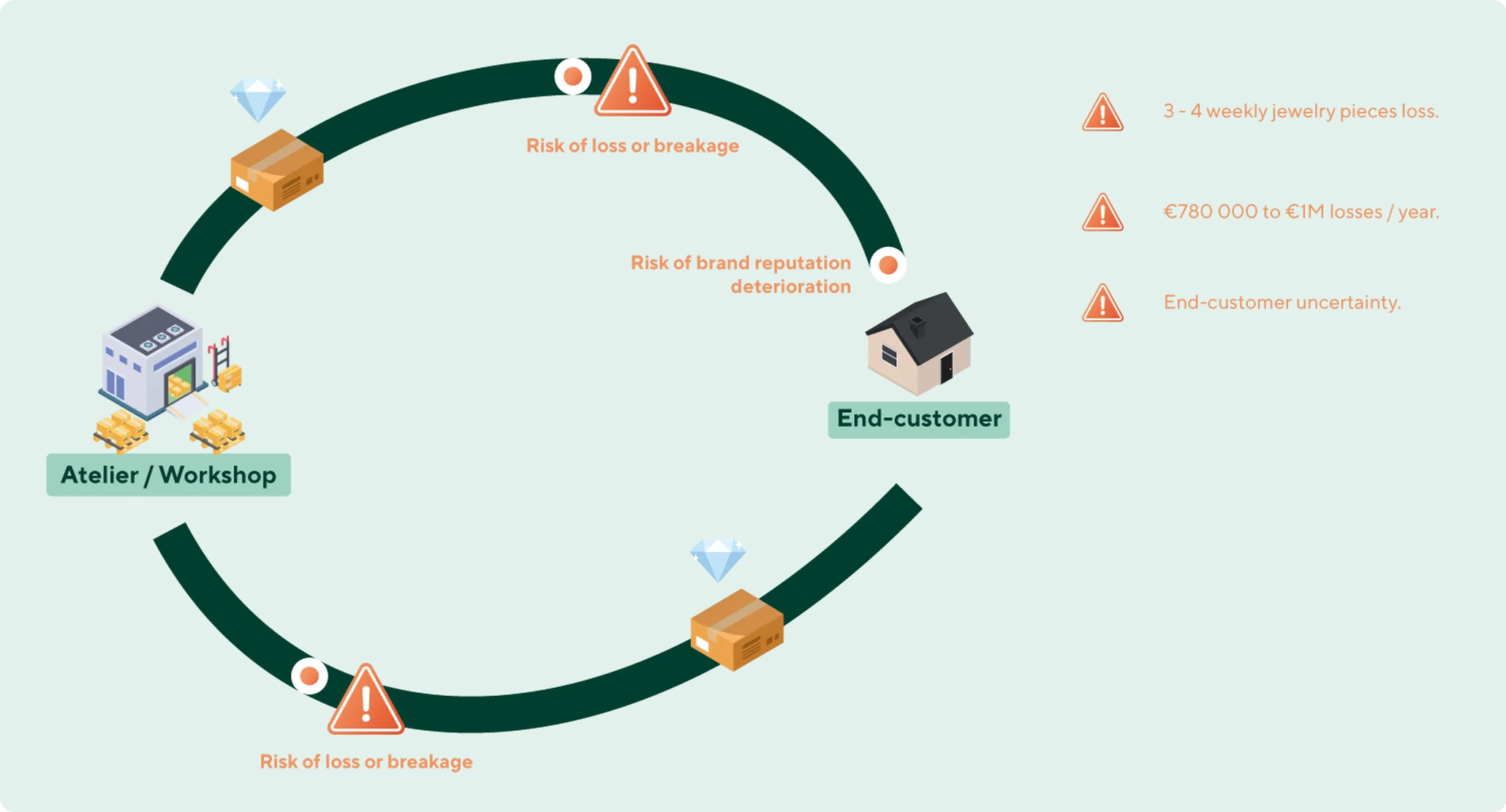
A heritage luxury jeweler shipping over 150 pieces of fine jewelry per day across Europe was losing 3 to 4 parcels per week — not to damage, but to theft. Standard carrier safeguards covered the financial loss but couldn't prevent it. After deploying THE BOX on its D2C flow, the Maison recorded zero losses within LivingPackets-managed shipments, and end customers began asking to receive future purchases the same way.
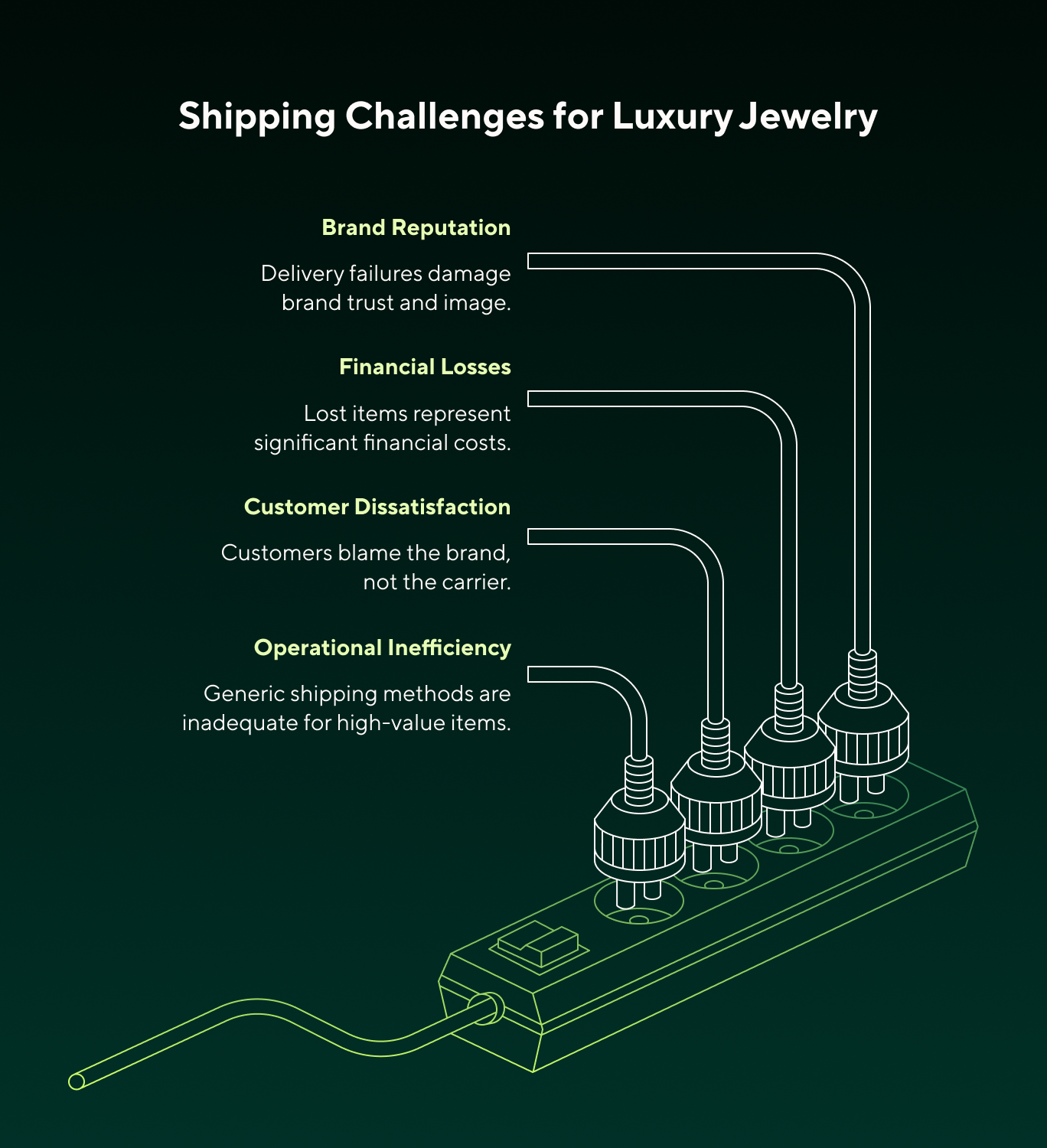
Shipping a piece of fine jewelry to a customer's home is not the same operational problem as shipping a phone case. One viral delivery failure undoes years of brand building. The customer doesn't blame the carrier. They blame the Maison.
A heritage luxury jeweler with a global e-commerce operation was running more than 150 D2C shipments per day across Europe. When the team described its logistics situation, the framing was striking: not "we have a loss problem" but "we have a communication problem with our customers about shipments." The status quo had been normalized to the point where the operational issue had become reputational management rather than loss prevention.
The actual data told a different story. Across that volume, the Maison was absorbing 3 to 4 losses per week. Not damage — losses. Pieces that did not arrive. Each one carrying not only the financial value of the item but the reputational weight of a delivery failure tied directly to a brand built on trust, craft, and presentation.
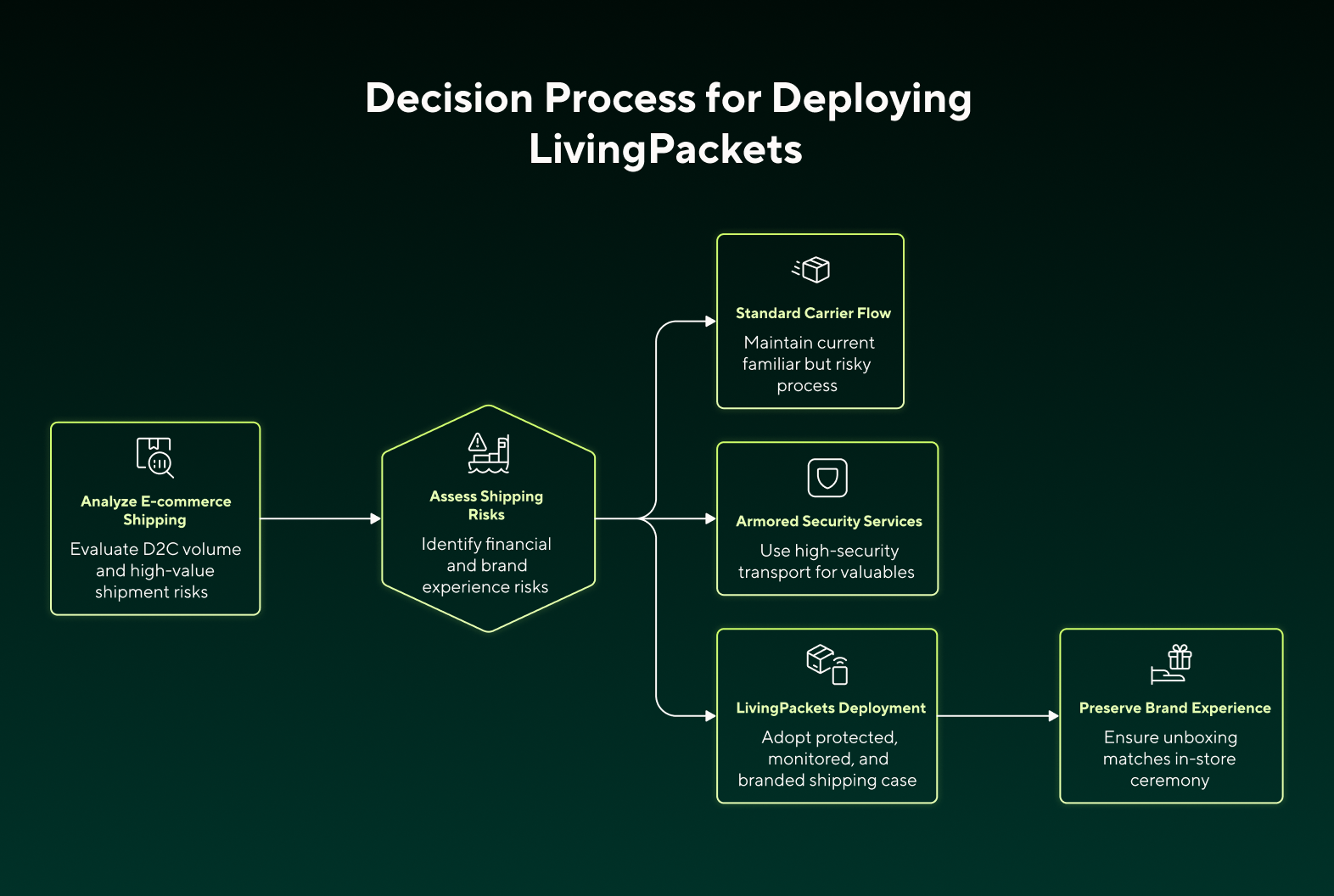
The team did not lack standard logistics safeguards. They were working with a major global carrier and had insurance in place. The gap was not in the contracts. It was in the structure: a generic shipping flow, designed for parcels in general, used to move objects that demanded specific care. Above a certain value threshold (€50K–€100K and up) the Maison was already using armored services like Brink's. But for the bulk of D2C pieces below that line, there was no middle option. Only the standard carrier flow and the hope that nothing would go wrong.
The decision to deploy LivingPackets did not come from a single incident. It came from a clearer-eyed look at what was actually being asked of the Maison's e-commerce shipping operation.
D2C had become a meaningful share of revenue. The volume of high-value pieces moving through residential delivery channels was growing. Every shipment carried two parallel risks: the financial risk of the piece itself, and the brand risk of arriving in a way that did not match the Maison's in-store experience. A customer who walked into a boutique received a carefully designed unboxing moment: the bag, the box, the ribbon, the ceremony. The same customer ordering online received a piece of jewelry packed inside a cardboard carton with a shipping label slapped on top.
Two alternatives were on the table:
LivingPackets offered a third option that fit the gap neither of the existing approaches could fill: a physically protected, electronically locked, continuously monitored shipping case that could move through the existing carrier network at e-commerce volume, while preserving the brand experience on arrival. The case became the package and the package became the moment, the customer's first touchpoint with the Maison's craft.
The Maison started with a defined volume of daily D2C shipments through its existing carrier on European routes. The pilot was deliberately operational, not technical-only: the question was not whether THE BOX could be tracked, but whether the shipping team could fold it into a daily routine without breaking flow.
The deployment is currently in a phased rollout. THE BOX is live and in use for daily LivingPackets-managed shipments, with carrier-side API integration being completed in parallel. When a shipping label is created through the carrier, it is pushed directly to the LivingPackets platform, where the team can transfer it to THE BOX via the mobile app. The operational benefit landed first; the carrier integration scales the model.
The Maison's shipping team folded THE BOX into its daily routine quickly. After a short familiarization period, the kind any warehouse expects when a new asset enters the flow, the team now describes THE BOX as "just another daily task." For a warehouse operation, that is the highest compliment a new piece of equipment receives. Adoption signals operational confidence; nobody is fighting the new tool.
A less visible benefit emerged in the carrier relationship. With continuous shipment data and immediate alerts on handling events, the conversation between the Maison's logistics team and the carrier's local team shifted from blame allocation to data-driven resolution. Disputes that previously required investigation could be settled with shipment evidence. Trust improved in both directions, and the customer-facing communication followed the same arc, moving from defensive explanation to confident delivery promise.
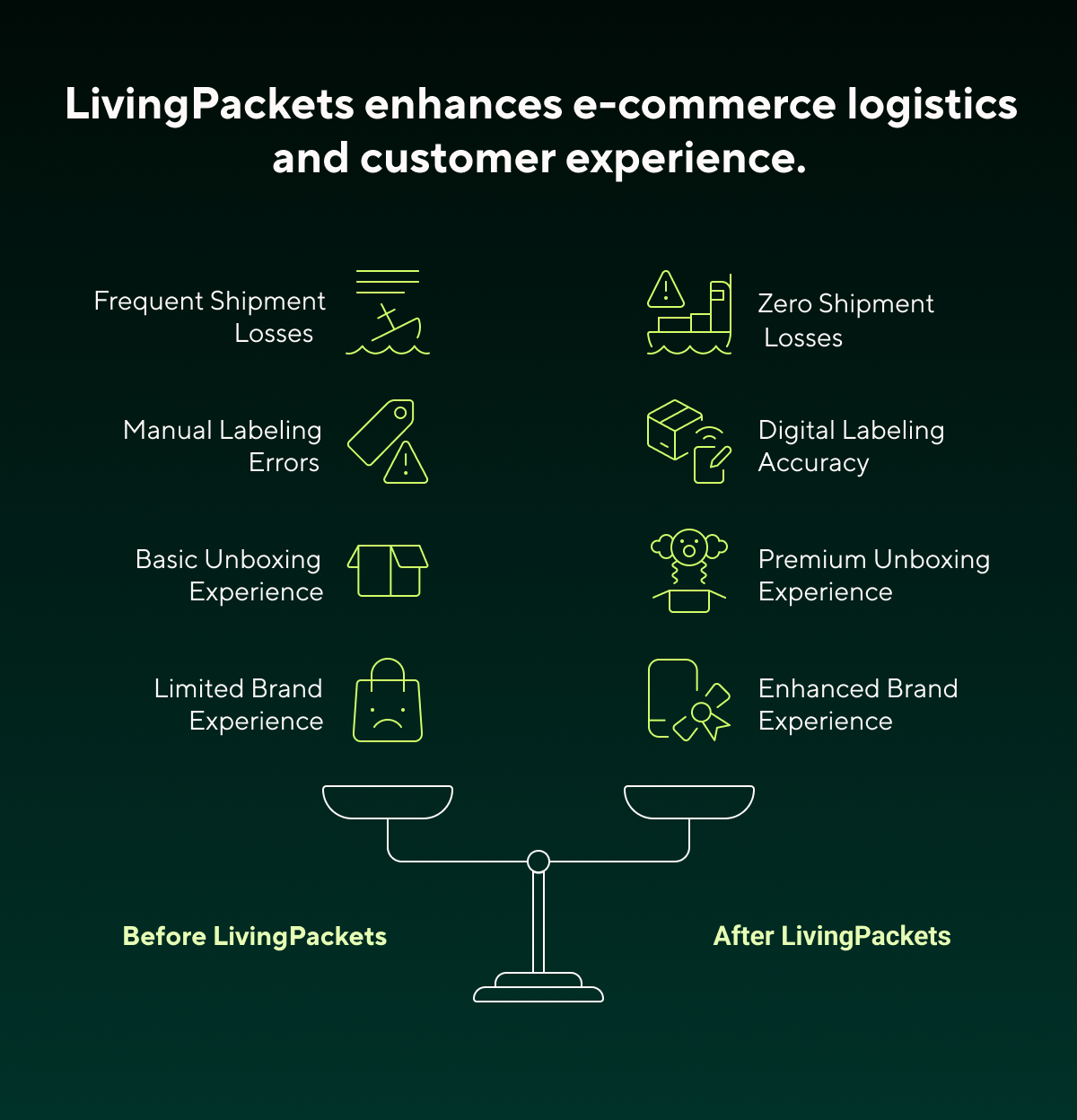
Before LivingPackets: 3 to 4 losses per week across the Maison's D2C operation. Each loss carried both replacement cost and the operational weight of customer communication, claims documentation, and brand exposure.
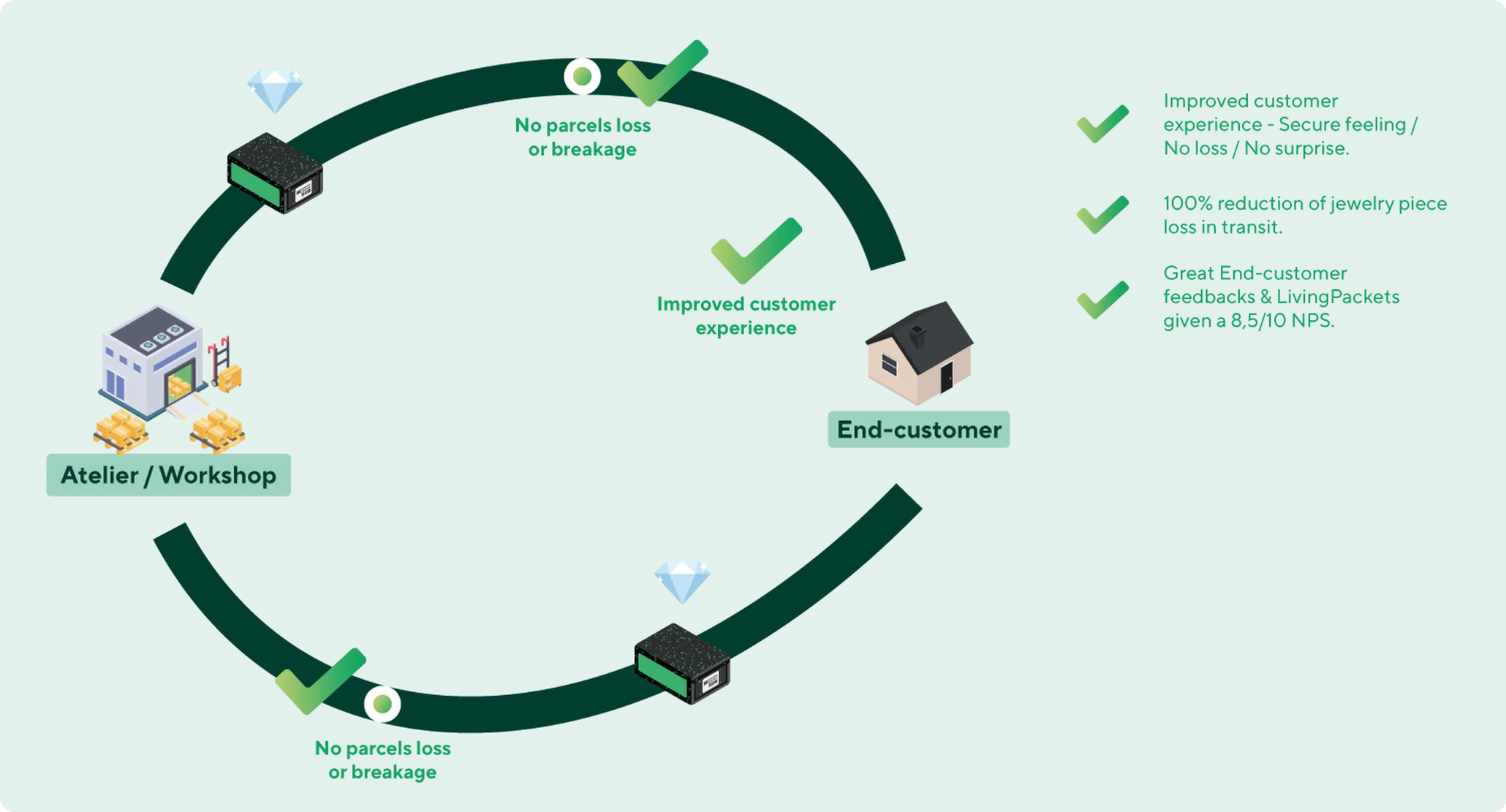
After LivingPackets: zero losses within the flows the Maison runs through THE BOX. This is the single most material outcome and the one that maps most directly to why LivingPackets exists. Other LivingPackets customers have seen similar results, including a 97% damage reduction and 11:1 ROI on fragile automotive parts.
A note on scope: the "zero losses" figure applies specifically to shipments managed through LivingPackets. The Maison's broader logistics operation includes flows that LivingPackets does not manage, including armored services for ultra-high-value pieces and standard carriers for routes outside the LivingPackets scope. The claim is precise: within the flows we manage, losses have gone to zero. We frame it that way because that is what is true.
THE BOX receives shipping labels digitally through the carrier integration: no thermal printing, no manual application, no mismatch between label and parcel. For a warehouse team preparing 150+ shipments per day, eliminating that error vector is the kind of daily operational improvement that compounds quietly.
End customers have responded to the unboxing experience in ways the team did not expect, including unprompted requests to receive future purchases in the same THE BOX. For a brand whose competitive position depends on the customer relationship, this kind of signal matters. The packaging stopped being a delivery vehicle and became part of what the customer remembered.
The Maison's reasoning for selecting LivingPackets was specific and unusual for a logistics decision: it was the experience layer. THE BOX gave the e-commerce customer something closer to the boutique opening moment, a deliberate, presented, almost ceremonial unboxing, that the Maison considered structurally impossible inside cardboard. The brand experience that anchors the in-boutique customer was, for the first time, possible to reproduce on a doorstep.

We wanted customers to live the boutique experience at home. When they open THE BOX, they get something closer to that moment.
The Maison and LivingPackets are working on the next phase of the deployment together.
Completing the carrier integration. With THE BOX already operationally live, the next phase completes the carrier-side API connection, automating label transfer from the carrier directly to THE BOX and moving the deployment from operationally effective to fully streamlined.
Expanding the use cases. The Maison is exploring new applications for THE BOX's reusable, two-way design, including multi-size try-on for rings, where the customer can sample several options and return what does not fit, all inside the same THE BOX. This kind of use case opens new categories of customer experience that single-use packaging cannot support, and it positions THE BOX as a strategic asset for the Maison's D2C roadmap rather than a logistics line item.
The same questions this customer faced apply to your own high-value shipments. Start a conversation with our team, or run you own losses and ROI in our self-help calculator.


