NEW STUDY
The Hidden Cost of High-Value Delivery: what a failed delivery really costs, beyond the refund.
The Hidden Cost of High-Value Delivery
Download the study


EN
EN



Customer: A B2B distributor of premium consumer electronics
Industry: Wholesale electronics, smartphones, laptops, and accessories
Product: THE BOX
Status: Active deployment on high-value shipment flow
Region: France and EU
A B2B electronics distributor shipping parcels worth up to €7,000–€8,000 was experiencing recurring losses on its high-value flow. Standard packaging and carrier insurance documented losses after the fact but could not prevent them. After deploying THE BOX, losses dropped to zero and the CEO describes shipping as no longer a source of weekly anxiety.
A B2B distributor of premium consumer electronics (smartphones, laptops, accessories) ships parcels whose individual value reaches €7,000 to €8,000. Their flow is straightforward in structure: parcels travel from the distributor to a network of resellers and corporate IT departments across France and the EU, via standard carrier services. The structure is straightforward. The risk is not.
For high-value electronics moving through a standard carrier flow, the question is not whether some parcels will go missing. It is how many, how often, and what it adds up to. For this distributor, the answer was a pattern of recurring losses on the high-value flow. Each loss represented a real parcel that left the warehouse and never reached the customer: stolen in transit, lost in handling, never accounted for. Each loss carried not just the merchandise value but the operational tail behind it: the customer-service work, the replacement coordination, the conversation with the reseller about what would happen next.
The distributor's CEO described what it felt like in plain terms: shipping a high-value parcel had become a poker game. The packaging was generic. The carrier handoff was opaque. The visibility into what happened to a parcel between the warehouse and the customer was zero. And the cost of that opacity was a steady drain that had become baked into how the business operated.
The deeper issue was not the loss number itself. It was the absence of any mechanism to prevent it. Insurance covered the financial side, slowly. Better packaging would have helped marginally. None of the standard answers touched the structural problem, which is that a high-value parcel inside a generic shipping flow has no way to defend itself and no way to tell anyone what happened to it.
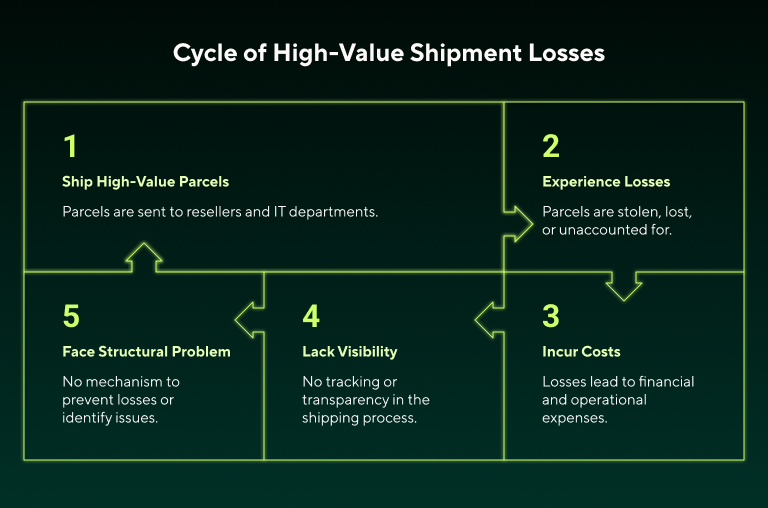
The decision to move was driven by the simplest possible logic: recurring losses on a flow that should not have any.
The distributor evaluated what the market offered. Standard solutions did what they were designed to do: secure-looking packaging, tracking numbers, insurance. None of which addressed the underlying problem. A cardboard box with a tracking number tells you where a parcel was. It does not stop someone from opening it. It does not authenticate the recipient. It does not give you evidence of what happened in transit when the parcel does not arrive.
LivingPackets offered something structurally different: a physically protected, electronically locked, continuously monitored shipping case. THE BOX did not just protect the parcel. It gave the distributor a chain of custody that the standard flow had never had. The lock removed the easy theft vector. The remote unlock control meant the box could only be opened by the right person at the right destination. The continuous monitoring gave the distributor visibility into what happened during transit.
The decision factors that mattered:
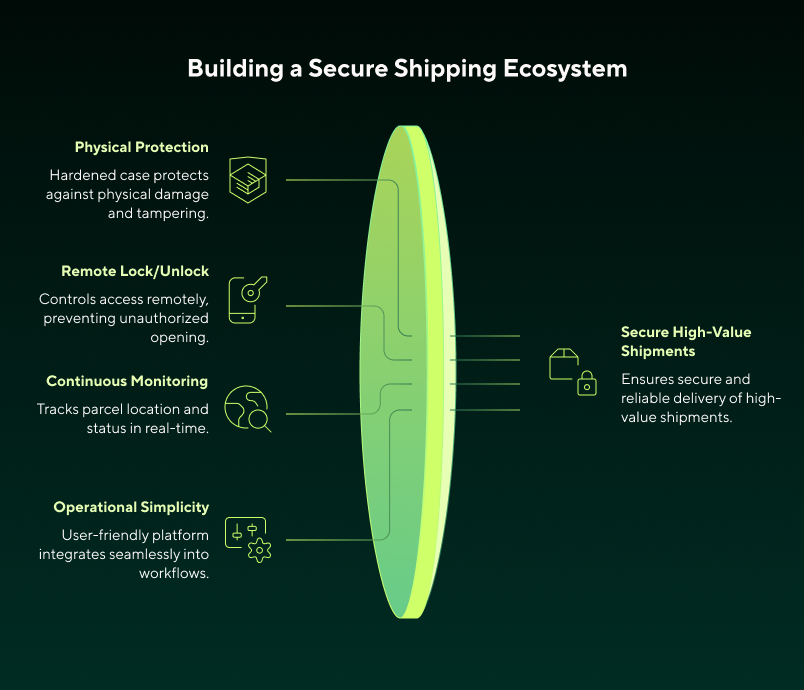
The distributor deployed straight into production. The loss data made the business case obvious, and the team moved directly to using THE BOX on the high-value flow.
Operating THE BOX as a reusable asset on a B2B flow with external customers requires one workflow change: the receiving customer needs to return the empty box for the next shipment cycle. This works smoothly for resellers and IT departments that receive shipments regularly. For customers who order less frequently, the team coordinates the return process with a short onboarding conversation on the first delivery, explaining how to lock and release the box. After the first cycle, customers handle the process themselves.
LivingPackets supported the distributor through the onboarding phase with a customer success process the CEO has characterized as efficient and reactive. New receiving customers, many of whom were seeing a connected reusable shipping case for the first time, were guided through their first unlock cycle, with LivingPackets standing by to help. After the first delivery, the workflow became routine on each customer's end.
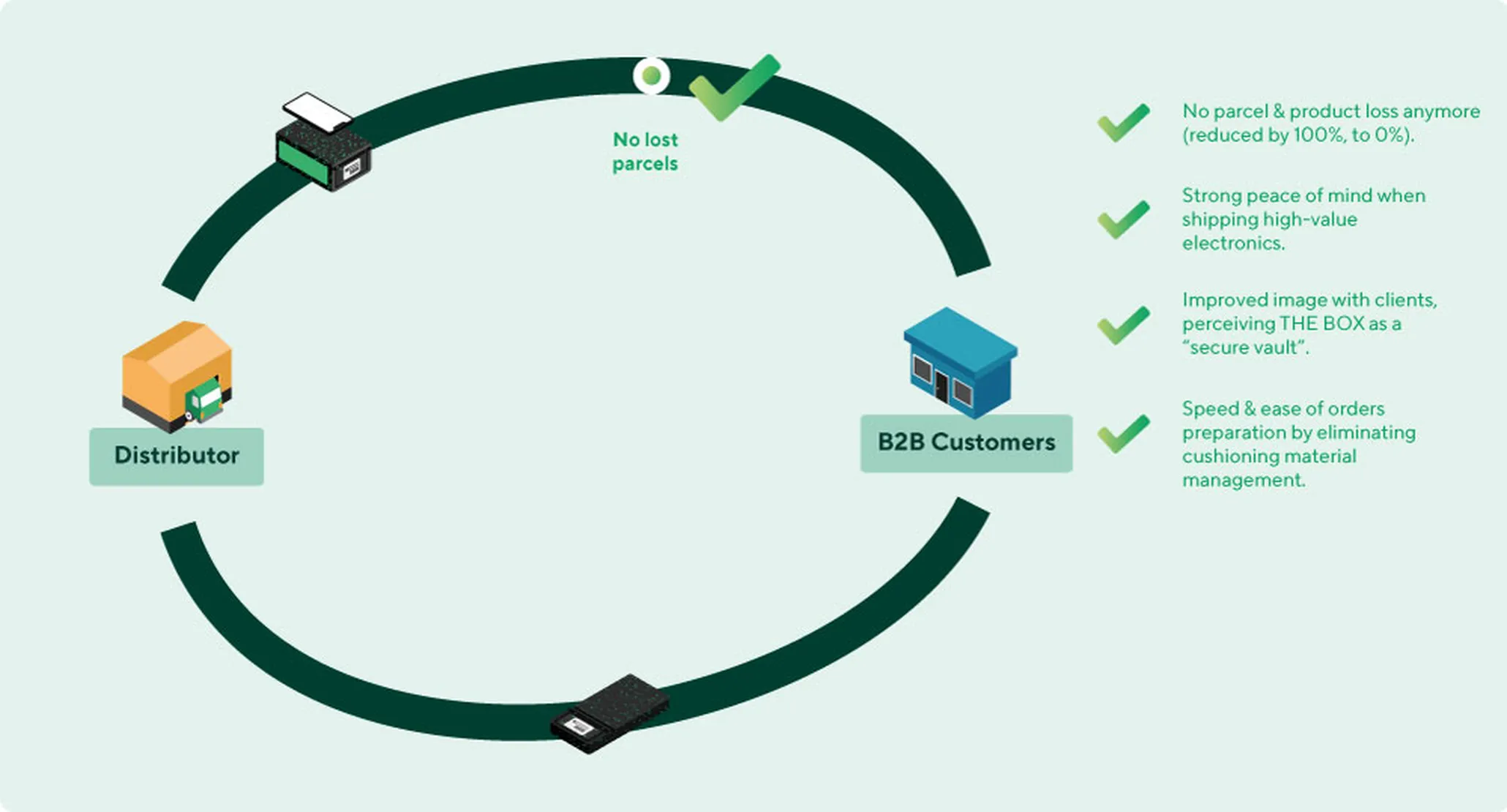
The headline outcome is direct. Against the equivalent pre-deployment period, the distributor has recorded a 100% reduction in parcel loss on shipments running through THE BOX. Zero losses since adoption.
For a business shipping individual parcels worth €7,000 to €8,000, a single loss is a significant event. Removing all of them changes both the financial picture and the operational stress that surrounds the shipping function. A major telecom retailer achieved similar results at national scale, with a 93% reduction in loss and damage claims across 130+ stores.
The CEO's articulation of the change is worth reporting in his own framing. Before LivingPackets, shipping a high-value parcel was, in his words, "a poker game." The team did not know whether the parcel would arrive intact. After LivingPackets, that uncertainty is gone. Shipping is no longer an event that carries weekly anxiety. This is the kind of outcome that does not show up in a metrics table but defines whether the deployment is durable.
End customers, the resellers and IT departments receiving the shipments, have responded to THE BOX in ways the distributor did not predict. Recipients have started referring to the unit as a "secure vault," a description that is not in any LivingPackets marketing material. It came from the customers themselves, and it tells the distributor something about how the shipment is being perceived at the moment of delivery. The packaging stopped being a parcel and became a signal about how seriously the distributor takes the protection of what it ships.
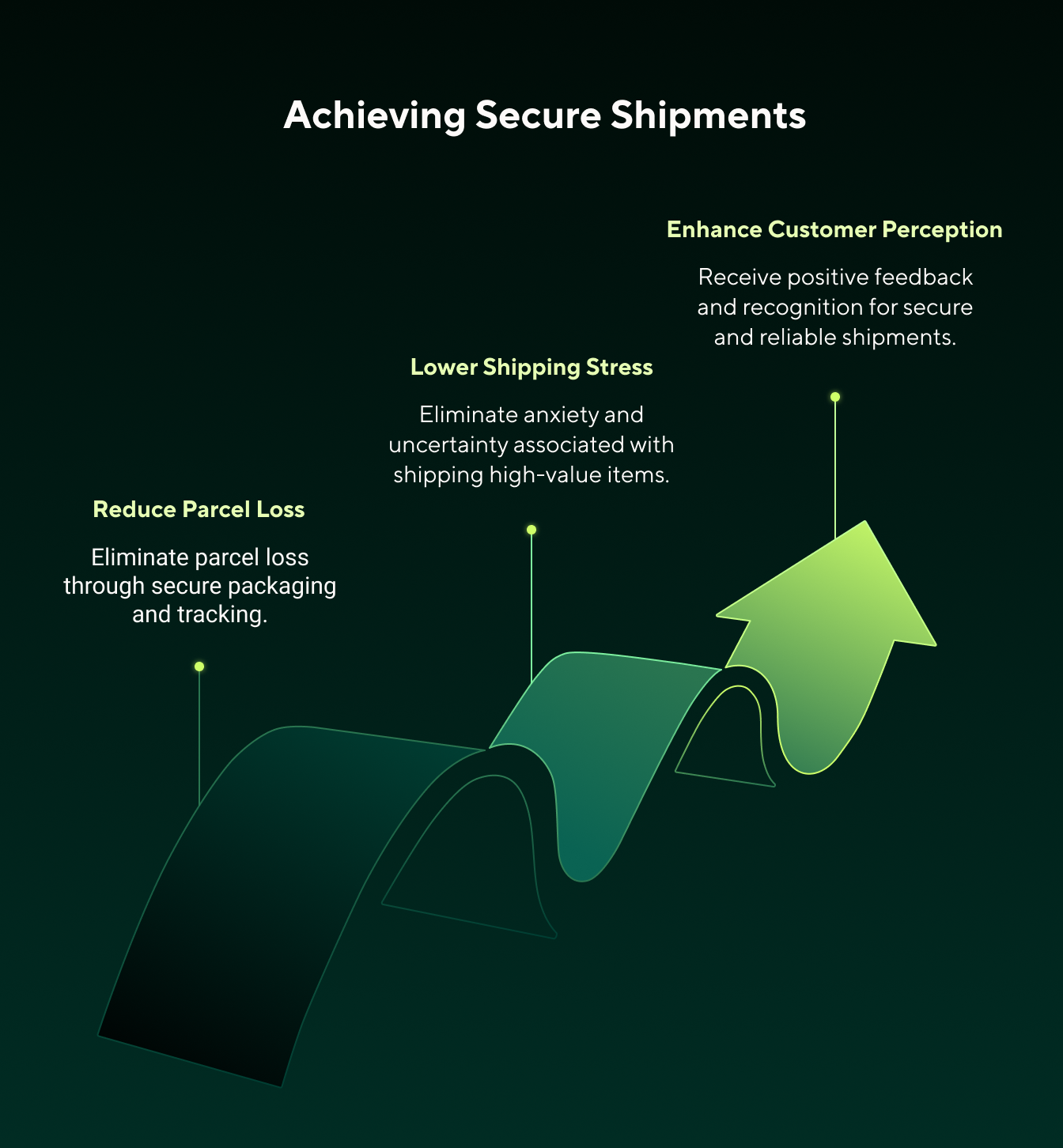
The distributor and LivingPackets are continuing to expand the model. The CEO has been recommending LivingPackets to other distributors in his network, with several already exploring how THE BOX could fit their own high-value flows.

When we had valuable parcels — €7,000, €8,000 — it was a bit of a poker game. We didn't know what would happen. We don't wonder about that anymore. We don't have this stress when shipping anymore.
The same questions this customer faced apply to your own high-value shipments. Start a conversation with our team, or run you own losses and ROI in our self-help calculator.


